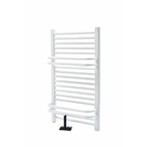
In contemporary interior design and commercial architecture, space optimization has evolved from a secondary preference into a primary design requirement. Modern living rooms, high-rise urban apartments, boutique hotel suites, and executive office spaces frequently feature expansive floor-to-ceiling glass windows, minimalist furniture layouts, and limited usable horizontal wall space. Traditional low-profile horizontal radiators, while functional, often consume valuable floor-adjacent wall real estate, disrupting interior furniture placement and architectural flow.
To address these architectural challenges, vertical panel radiators (also referred to as upright or tall central heating radiators) have emerged as the premier hydronic heating choice for architects, HVAC engineers, and property developers worldwide. As a specialized vertical panel radiator supplier, Zhejiang Jinyun Shengda Industry Co., Ltd. (SDEN) combines modern aesthetic engineering with industrial-grade manufacturing capability to deliver high-capacity vertical heating solutions.
1. The Engineering Advantages of Vertical Heating Dynamics
Vertical radiators are not simply horizontal radiators mounted vertically; they are specifically re-engineered hydronic appliances optimized for tall convective thermal plumes and radiant heat exchange:
• Spatial Footprint Minimization: By capitalizing on vertical wall height (standard heights ranging from 1400mm to 2000mm) while keeping horizontal width compact (300mm to 600mm), vertical radiators liberate critical horizontal floor space for furniture, cabinetry, or architectural openings.
• Enhanced Chimney Convective Effect: The vertical channel geometry induces a powerful natural chimney effect. Cold air near floor level is drawn rapidly into the base of the radiator, heated as it travels upward through internal convector fins, and discharged efficiently from the top into the upper thermal zone of the room, creating uniform temperature distribution.
• Architectural Visual Integration: Featuring clean vertical lines, flat-line panel options, and concealed bottom piping connections, vertical radiators serve as subtle architectural features rather than visual obstructions.

2. Application Scenarios in Modern Commercial and Residential Projects
For procurement managers and heating engineering contractors, vertical steel radiators offer versatile problem-solving capabilities across diverse building typologies:
• Living Rooms & Open-Plan Residential Spaces: Positioned in narrow wall recesses flanking patio doors or full-length glass walls where horizontal radiators cannot fit.
• Commercial Offices & Executive Boardrooms: Providing high heat output without encroaching on perimeter office desks or floor sockets.
• Educational Institutions & Public Facilities: Tall upright radiators installed at safe wall heights prevent accidental sitting or contact by students while providing rapid room warm-up.
• Hospitality & Hotels: Sleek vertical panel radiators blend seamlessly with boutique hotel room aesthetics, supporting both luxury feel and energy efficiency.
3. Manufacturing Excellence & Structural Rigidity at SDEN
Because vertical radiators feature long internal water channels subjected to elevated hydrostatic pressure at the bottom base due to gravity water columns, structural rigidity and weld precision are paramount. Low-quality vertical radiators suffer from internal pressure distribution imbalances, leading to noise, localized cold spots, or weld joint leakage over time.
SDEN's manufacturing facility addresses these engineering challenges through state-of-the-art production infrastructure:
• Premium Baosteel Cold-Rolled Steel: SDEN utilizes high-grade, ultra-low carbon cold-rolled steel supplied by Baosteel Group. The exact steel thickness and anti-corrosive chemical composition eliminate thermal wall expansion under varying heating system pressures.
• Automated Italian LEAS Robotic Welding: Long vertical water channels require flawless, continuous seam welding. SDEN's two Italian LEAS fully automated production lines execute micro-precise spot and seam welds along the entire vertical height, guaranteeing structural integrity under operating pressures up to 10 bar.
• Dual-Layer Anti-Corrosion Surface Finishing: SDEN subjects every vertical panel radiator to Henkel weak-acid cleaning, followed by full-immersion German BASF electrophoretic priming and AkzoNobel epoxy powder topcoating with dual 200°C curing cycles. This ensures the tall exterior surfaces maintain flawless color retention without peeling or corrosion, even in humid environments.
4. Technical Specifications and Custom OEM Capability
As a leading tall central heating radiator OEM manufacturer, SDEN provides overseas distributors and engineering buyers with extensive customization parameters:
• Model Variations: Vertical Type 10, Type 11, Type 20, Type 21, and Type 22 panel designs.
• Front Panel Styling: Available in classic grooved profile options or modern ultra-flat (Flat Line) aesthetic surfaces.
• Flexible Connection Configurations: Center bottom connections (50mm valve distance), bottom side connections, or standard multi-port configurations compatible with thermostatic radiator valves (TRV).
• Rigorous Quality Testing: 100% of units undergo pneumatic and hydrostatic pressure testing before final packaging, certified to European EN 442, CE, RoHS, and ISO 9001:2000 standards.
With a 36,500 square meter manufacturing base and an annual production output capable of supplying large global project orders, SDEN offers international partners superior cost-to-quality ratios, custom packaging, and reliable 10-year warranty coverage.