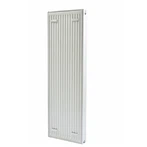
In the global hydronic heating and central heating equipment market, steel panel radiators have established themselves as the industry standard for residential, commercial, and institutional heating systems. For international HVAC distributors, building material importers, heating engineering contractors, and OEM brand partners, sourcing high-performance steel panel radiators requires a comprehensive evaluation that extends far beyond initial unit pricing. The long-term reliability, thermal output efficiency, corrosion resistance, and manufacturing consistency of panel radiators directly dictate customer satisfaction, warranty liabilities, and market reputation in demanding overseas markets.
This comprehensive sourcing guide delves into the crucial technical specifications, production methodology standards, material quality criteria, and factory manufacturing capabilities required to select a tier-one steel panel radiator manufacturer in China.
1. Understanding Steel Panel Radiator Classification: Types, Dimensions, and Thermal Efficiency
When specifying panel radiators for large-scale procurement or regional distribution networks, understanding internal architecture and structural variations is essential:
• Type 11 (Single Panel, Single Convector): Features one water-carrying steel panel and one set of internal convector fins. With a slim profile and shallow depth, Type 11 radiators are ideal for compact rooms, narrow hallways, or space-constrained installations where moderate heat output is required.
• Type 21 (Double Panel, Single Convector): Constructed with two water-carrying steel panels surrounding a single convector fin sheet. It balances slim visual aesthetics with enhanced radiant heat transfer.
• Type 22 (Double Panel, Double Convector): The absolute benchmark and most widely specified model in European and Central Asian heating markets. Featuring two steel panels and two deep convector fin sets, Type 22 offers maximum thermal efficiency, rapid hydronic heat distribution, and optimal heat output per linear meter of wall space.
• Type 33 (Triple Panel, Triple Convector): Designed for high-heat-demand commercial applications, cold climate regions, or expansive open spaces. Type 33 delivers maximum BTU/watt heat transfer capability.
From a dimensional perspective, flexible manufacturing options are necessary to satisfy regional installation standards. Premium manufacturers standardly offer heights ranging from 300mm, 400mm, 500mm, 600mm, up to 900mm, with horizontal lengths customizable from 400mm up to 3000mm. Furthermore, offering both traditional side connection configurations and bottom connection (Ventil V6) options with built-in valve inserts is critical for modern manifold-based plumbing systems.

2. Key Raw Materials & Structural Engineering: The Baosteel Advantage
The operational lifespan of a central heating steel panel radiator is fundamentally determined by the metallurgy of the raw steel used during press forming. Substandard steel with non-uniform thickness or micro-impurities under high operational pressure leads to thermal fatigue, weld failure, and premature pinhole corrosion.
At Zhejiang Jinyun Shengda Industry Co., Ltd. (SDEN Radiator), quality control begins directly at the raw material procurement stage. SDEN exclusively partners with Baosteel Group-a Fortune Global 500 steel enterprise-to source custom-engineered, ultra-low carbon cold-rolled steel sheets containing trace nickel alloys.
This specific steel formulation delivers unmatched structural benefits for wholesale panel radiators:
• Exceptional Ductility & Press Formability: Allows high-precision deep stamping of water channels without inducing micro-fractures along channel contours.
• Enhanced Tensile Strength: Easily withstands continuous high working pressure and hydronic pressure surges (hydraulic shock) without structural deformation.
• Inherent Corrosion Resistance: The nickel-containing, ultra-low carbon matrix acts as a primary defense barrier against dissolved oxygen corrosion in central heating water circuits.
3. Advanced Production Line Technology: Italian LEAS Super Automatic Welding
In hydronic panel radiator manufacturing, manual or semi-automated spot welding introduces structural variance, weak weld seams, and potential leak points. A high-volume OEM panel radiator supplier must utilize fully automated, robotic welding infrastructure to guarantee pressure integrity across tens of thousands of units.
SDEN Radiator operates two state-of-the-art Italian LEAS super steel panel radiator automatic welding production lines. Italian LEAS technology is globally recognized as the pinnacle of radiator manufacturing automation.
Key technical advantages of automated LEAS welding include:
• Full-Process CNC Precision: Laser-guided seam welding and multi-point spot welding ensure 100% molecular bonding along every water channel margin and convector fin contact point.
• Hydrostatic Leak Testing Integration: Every welded radiator panel undergoes continuous inline high-pressure testing at elevated bars to guarantee zero defect delivery.
• Smooth Internal Waterways: Precision energy control eliminates internal weld slag and burrs, maintaining smooth hydronic flow rates and preventing localized debris accumulation.
4. Surface Coating & Anti-Corrosion Mastery: Weak Acid Pre-Treatment & Double Baking Process
Surface finishing is not merely decorative; it is the vital protective envelope that shields the steel core from atmospheric humidity, moisture, and mechanical abrasions. Most low-cost manufacturers utilize single-coat powder spray systems that skip comprehensive surface pre-treatment, leading to paint peeling, bubbling, and rusting within 2 to 3 years.
SDEN Radiator implements a rigorous, multi-stage surface treatment protocol utilizing materials exclusively from Global Fortune 500 chemical leaders:
Step 1: Henkel Weak Acid Phosphating & Degreasing
Raw steel plates arrive coated with protective anti-rust oils and fine iron particles. SDEN utilizes industrial cleaning agents from Henkel (Germany) in a weak acid washing bath. This removes all surface contaminants without etching or damaging the underlying steel substrate, forming a microscopic phosphating conversion layer for superior primer adhesion.
Step 2: German BASF Ultra-Strong Electrophoresis (Cataphoresis)
Radiators are fully submerged in a BASF electrophoretic coating tank. Electrophoretic deposition (E-coat)-a technology standard in aviation and automotive manufacturing-ensures that 100% of the radiator surface, including hard-to-reach internal fins and tight channels, receives a uniform, corrosion-resistant primer layer. Following immersion, the radiator undergoes its first 200°C high-temperature baking cycle in a fully enclosed oxygen-free chamber.
Step 3: AkzoNobel Powder Topcoat & Second 200°C High-Temperature Curing
Following the electrophoretic primer curing, the warm radiator enters an automated powder coating booth where AkzoNobel (Netherlands) epoxy resin powder is electrostatically applied. The unit then enters a second 200°C baking oven. This dual-bake, two-stage process creates an impermeable, UV-stable, and scratch-resistant finish immune to temperature fluctuations and high humidity.
5. International Compliance Standards and Factory Strength
For overseas buyers importing heating equipment into Europe, Central Asia, and North America, strict regulatory compliance is mandatory:
• EN 442 Certification: The standard thermal output and pressure test specification for European radiators.
• CE & RoHS Compliance: Mandatory safety and environmental health standards.
• ISO 9001:2000 Management System: Guaranteeing standardized quality management across all operational phases.
Established in 1995, SDEN Radiator spans a 36,500 square meter modern production facility in Lishui, Zhejiang, China, supported by over 40 million RMB registered capital and total investments exceeding 200 million RMB. Exporting to over 60 countries, SDEN provides global commercial clients with robust OEM/ODM production capability, complete customized packaging, and a confidence-backed 10-year factory warranty.