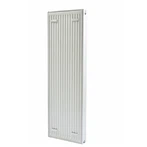
During winter heating, many users encounter problems such as radiators failing to heat up or underfloor heating not reaching the desired temperature. In reality, the causes vary; issues may stem from internal flow imbalances within the system, or from factors such as installation errors, airlocks, or water pressure problems. If there is significant temperature unevenness between rooms-often seen in parallel heating systems-it is usually because uneven water distribution prevents adequate circulation in some radiators. To address this, you can sequentially close the inlet valves of the upstream radiators to prioritize heating in the downstream pipes, then gradually reopen the valves one by one. This process helps achieve hydraulic balance across the system, restoring normal heat output to all radiators.
If a radiator is hot at the top but cool at the bottom, or fails to heat up in certain areas, it is often due to trapped air creating an airlock. Locate the air vent valve on the radiator and use a screwdriver to turn it counter-clockwise, gradually releasing the air until a steady stream of water flows out. This venting process usually needs to be repeated several times to fully clear accumulated air. It is advisable to turn off the boiler or main valve before starting; restart the system only after all air has been purged to prevent flow obstruction and ensure heat is evenly distributed across all heating surfaces.
If a radiator fluctuates between hot and cold, or if there are noticeable temperature variations in certain areas, the issue may lie in the installation method. A common problem is reversed inlet and return connections-such as installing a system designed for "top-in, bottom-out" flow as "bottom-in, bottom-out"-which causes a short circuit in the water flow and prevents parts of the radiator from dissipating heat effectively. Such issues typically require professional intervention to correct the installation or adjust the connections, ensuring hot water circulates fully along the intended path. If an entire radiator fails to heat up at all, the cause may be uneven flow distribution across the branches; adjusting the inlet valves on each radiator to balance flow resistance can help the system operate harmoniously as a whole.

When the heating system as a whole fails to provide sufficient warmth throughout the home, the problem is usually more complex and may involve multiple factors, such as airlocks, pipe blockages, or hydraulic imbalances. If air entrapment is the cause, air should be bled from the system group by group. If a pipeline blockage is suspected, circulation can be restored by flushing the system or cleaning the pipes. If the issue stems from an imbalance in water flow distribution, adjustments can be made by gradually closing inlet valves to redistribute the water flow. In high-rise buildings where lower floors are warm but upper floors are not, the problem is usually due to insufficient system water pressure; property management technicians can be contacted to increase the constant-pressure makeup setting at the heat exchange station, thereby ensuring adequate flow and temperature for the upper-floor water circulation.
For households using underfloor heating, issues such as the floor failing to heat up or significant temperature disparities are typically caused by pipeline blockages, airlocks, or improper system modifications. If air entrapment is the culprit, air can be bled using the valves on the manifold. One method involves closing all circuit valves, then opening each branch circuit one by one to bleed air through the supply-side vent valve until the water flow stabilizes before closing the valve again. If the problem persists, a water-flushing method can be used: close the main return valve, keep one branch circuit open, connect a hose to the return-side vent valve to drain the water, and repeat this process for each circuit to flush out internal sediment and cold water, thereby restoring smooth circulation.
A clogged underfloor heating filter is another common cause. If the filter mesh is blocked by debris, it directly affects hot water flow velocity and system pressure. To address this, close all valves on the manifold, use an adjustable wrench to unscrew the filter cap, remove the mesh, and rinse it thoroughly with clean water; a soft brush may be used to remove stubborn deposits, but acidic cleaners must be avoided. Reinstalling the cleaned filter restores normal flow. Most issues involving radiators or underfloor heating failing to heat up can be effectively resolved using these methods. If the problem persists, professional HVAC technicians should be contacted promptly to inspect the system and prevent the issue from worsening or compromising operational safety.