The right steel panel radiator is the one that meets the room heat loss at the planned operating temperature and fits the installation. Choosing by appearance, length or a catalogue wattage alone can leave a room underheated, particularly when a heating system runs at lower water temperatures.
As a steel panel radiator manufacturer, we recommend establishing the room demand and system conditions first. The following process applies to hydronic radiators connected to a suitable hot water heating system.
1 Establish the room heat loss
Start with a room by room design heat loss calculation. Relevant inputs include local winter design temperature, target indoor temperature, external walls, glazing, insulation, ceiling height and ventilation. Two rooms with the same floor area can require very different heat outputs.
An area based allowance can support an early estimate, but it is not a universal sizing rule. For example, if a project estimate assumes 80 W/m², a 20 m² room gives 20 × 80 = 1,600 W. The arithmetic is simple; whether 80 W/m² is appropriate must be checked for that building. Use the confirmed design load for final selection.
2 Match the output to the operating temperature
A heat output figure is meaningful only with its temperature conditions. For common catalogue comparisons, the radiator temperature difference is the mean of flow and return water temperatures minus the room temperature. It is not the difference between flow and return water.
|
Flow / return / room |
Mean water temperature |
Radiator temperature difference |
|
75 / 65 / 20 °C |
70 °C |
50 K or ΔT50 |
|
55 / 45 / 20 °C |
50 °C |
30 K or ΔT30 |
At the lower temperature difference, the same radiator delivers less heat. Use the selected manufacturer's output table for the actual conditions, or its approved correction method. Do not compare one radiator rated at ΔT50 with another rated at ΔT30 as though the figures were equivalent.
Worked example: assume a radiator is rated at 2,000 W at ΔT50 and its applicable correction factor at ΔT30 is 0.51. Its adjusted output is 2,000 × 0.51 = 1,020 W, below the 1,600 W room load in the earlier example. With that same assumed factor, the required ΔT50 catalogue rating would be approximately 1,600 ÷ 0.51 = 3,137 W.
These are illustrative values, not SDEN model ratings. The calculation shows why lower temperature projects may need a larger radiator, a different panel type or more than one emitter. Obtain the output data for the exact proposed model before ordering.
3 Choose the panel type and dimensions together
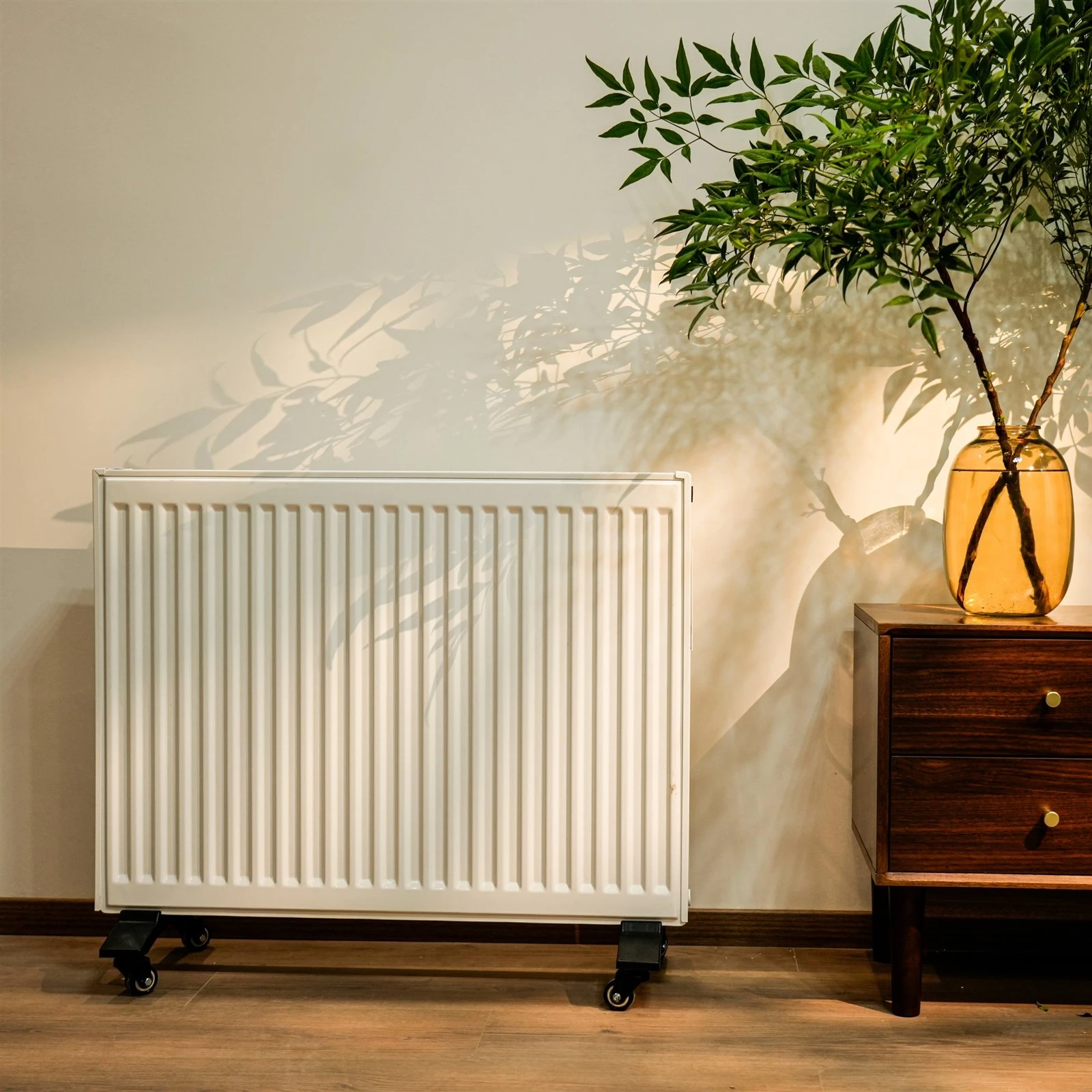
Steel panel radiators use water carrying panels and, in many designs, convector fins. In the common type designation, the first digit identifies the number of panels and the second identifies the number of convector fin sets. The following is a general construction guide; availability depends on the supplier's range.
|
Type |
Panels |
Fin sets |
Selection consideration |
|
11 |
1 |
1 |
A slimmer configuration when the verified output meets the load. |
|
21 |
2 |
1 |
Compare where both depth and output matter. |
|
22 |
2 |
2 |
More convector surface within a double panel format. |
|
33 |
3 |
3 |
Generally more output at the same height and length, with greater depth and weight. |
Compare height, length, depth and output as one specification. If a Type 22 fits the wall but falls short at the design temperature, check whether a Type 33 or a longer unit can meet the requirement. If neither fits, consider distributing the load between two appropriately located radiators.
Our horizontal steel panel radiator range at SDEN includes Type 22 and Type 33 configurations. Use the drawing and output schedule for the exact size and connection version being quoted. A type number by itself is not a heat output rating.
4 Check the complete installation space
Measure the space for the radiator body, brackets, valves and pipework. Leave the manufacturer's required clearances above, below and around the radiator so air can circulate. A deep window sill, radiator cover or large sofa can change the installed performance even when the radiator fits physically.
Check the wall construction and the radiator's filled weight before choosing fixings. For a replacement, record pipe centres, connection thread, inlet and outlet positions and valve arrangement. A radiator with the same external dimensions may still need pipework changes.
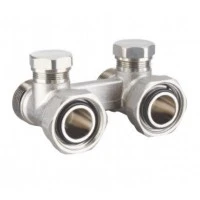
Choose side or bottom connections according to the approved connection diagram. Confirm whether brackets, air vents, plugs, valve inserts and thermostat heads are included or supplied separately. A vertical model should also be checked using its own drawing and performance data; do not rotate a horizontal model unless its manufacturer expressly allows it.
5 Verify system limits and durability requirements
Match the radiator's permitted working pressure and maximum operating temperature to the system design, including relevant pressure variations. Test pressure is a separate verification condition and must not be treated as the allowable continuous working pressure. District heating and high rise installations require particular attention to the building's actual hydraulic conditions.
Check the intended system arrangement, water treatment requirements and any glycol restrictions against the product instructions. Repeated fresh water top ups and oxygen ingress can promote internal corrosion. Investigate leakage or a system fault rather than treating frequent refilling as normal maintenance.
For the outside surface, ask about pretreatment, coating and the intended installation environment. At SDEN, we use KTL electrophoretic coating and powder finishing for our steel panel radiators. Request the relevant specification for the chosen range, especially where moisture exposure is a concern. External corrosion protection should not be read as proof that every internal water condition is acceptable.
A thermostatic valve can regulate room heat delivery, and a compatible smart head can add scheduling or remote control. Both still depend on correct sizing and commissioning. The installer should flush and commission the system according to the applicable instructions, vent trapped air, check for leaks and balance the flow between radiators.
6 Compare a complete supply specification
Ask suppliers to quote against the same technical basis: model, type, dimensions, connection arrangement and heat output at the stated temperatures. Request the applicable heat output test or declaration, installation instructions and warranty terms. An EN 442 reference should relate to the relevant product data; an ISO 9001 quality management certificate is not a substitute for a model's heat output evidence.
For a project or distributor order, also agree the finish, accessories, packaging, labels, quantity and delivery requirements. Compare the complete scope so that a lower unit price does not conceal a different output, an omitted valve set or additional installation work.
Prepare your enquiry to SDEN
Include the project location and target market; the room heat loss or radiator schedule; the heat source and design flow, return and room temperatures; available wall dimensions; working pressure; connection drawings; and quantities. Add any finish, accessory, packaging or delivery requirements.
With those details established, model selection becomes a checkable decision: the chosen radiator must meet the load at the specified temperatures, fit the installation and have the supporting information needed for purchase and commissioning.