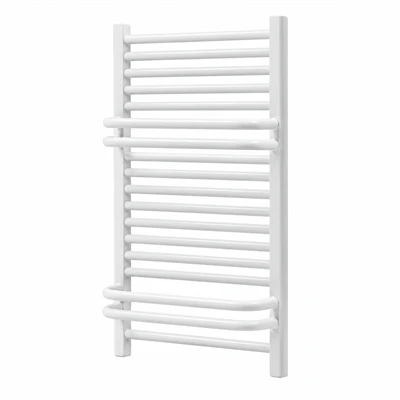
Steel plate radiators are mainly composed of steel plates, heat dissipation fins, convection plates and other parts, which are formed by welding, pressing and other processes. Its heat dissipation principle mainly uses heat conduction and convection to transfer the heat of hot water or steam to indoor air, so as to achieve the purpose of heating up.
Steel plate radiators have the advantages of compact structure, good heat dissipation effect and strong pressure-bearing capacity, and are suitable for various heating systems. The amount of heat dissipated by a steel panel radiator depends on a number of factors, including design specifications, size, material, operating temperature difference, etc.
Generally speaking, the better the material used, the higher the heat dissipation. In addition, in addition to the characteristics of the heat sink itself, it is also necessary to consider the overall operating status of the heating system, the supply capacity of the heat source and other factors, which must also consider the impact on the heat dissipation.